
Planning a Morocco 10 day itinerary requires balancing ancient imperial cities, dramatic mountain passes, and vast desert landscapes without exhausting your schedule. Whether you are a solo adventurer, a couple, or a small group of friends, this North African kingdom rewards thoughtful pacing. In addition, understanding local transit networks, realistic daily costs, and essential financial protections will transform your trip from stressful to seamless. Below, you will find a complete, day-by-day blueprint engineered for maximum cultural immersion and logistical efficiency.
The ideal Morocco 10 day itinerary follows a classic loop: start in Marrakech (Days 1–3), cross the High Atlas Mountains to Ait Benhaddou and Dades Valley (Day 4), camp in the Sahara Desert at Merzouga (Day 5), travel north to Fes (Days 6–7), explore blue-washed Chefchaouen (Day 8), and finish in Casablanca or Rabat (Days 9–10).
At-a-Glance Trip Summary
- Optimal Route: Marrakech → High Atlas → Merzouga (Sahara) → Fes → Chefchaouen → Casablanca/Rabat.
- Estimated Total Budget: $850–$1,100 USD (Budget), $1,600–$2,400 USD (Mid-Range), $3,800+ USD (Luxury) per person, excluding international flights.
- Best Seasons to Visit: March to May (Spring) and September to November (Autumn) for mild 20°C–28°C (68°F–82°F) daytime temperatures.
- Key Financial & Safety Tip: Carry a zero-foreign-transaction-fee credit card for riads, keep Moroccan Dirhams (MAD) for souks, and secure comprehensive travel medical insurance with $250,000+ emergency evacuation coverage.
Morocco 10 day itinerary: 1. Overview, Timing & Strategic Planning
Before booking flights, you must align your travel dates with Morocco’s diverse regional climates. Because the country spans coastal plains, towering mountain ranges, and arid desert basins, temperatures shift dramatically within a single day’s drive. Therefore, choosing the right season is the single most important decision for your Morocco 10 day itinerary.
Best Months and Seasonal Weather Breakdown
Spring (March through May) and autumn (September through November) offer the most comfortable conditions nationwide. During these shoulder months, daytime highs in Marrakech and Fes hover between 22°C and 28°C (72°F to 82°F). Meanwhile, nights in the Sahara Desert remain pleasantly cool rather than freezing. Consequently, you can explore open-air medinas and hike mountain trails without battling extreme heat.
In contrast, summer (June through August) brings scorching temperatures exceeding 42°C (108°F) in Marrakech and Merzouga. If you must travel in summer, plan your outdoor sightseeing before 10:00 AM and retreat to a shaded riad pool during the afternoon. Conversely, winter (December through February) delivers crisp, sunny days in the cities, though Sahara nights regularly drop below 2°C (36°F) and High Atlas passes occasionally experience heavy snow.
Crowd Patterns and Cultural Calendar
Tourist volume peaks during Easter week, October, and the Christmas-to-New-Year holidays. As a result, boutique riads in Marrakech and luxury desert camps in Merzouga often sell out four to six months in advance. Furthermore, you should check the Islamic lunar calendar before finalizing your dates. During Ramadan, many local restaurants close during daylight hours, although major tourist hotels continue serving guests discreetly.
For travelers seeking authentic heritage experiences, several Moroccan medinas—including Marrakech, Fes, and Ait Benhaddou—are recognized by the UNESCO World Heritage official guide. Visiting these historic sites early in the morning allows you to appreciate their intricate architecture before tour buses arrive.

2. Morocco 10 Day Itinerary: Detailed Day-by-Day Blueprint
This carefully paced route minimizes backtracking by utilizing an open-jaw flight strategy: arrive in Marrakech (RAK) and depart from Casablanca (CMN) or Tangier (TNG). However, if you book a round-trip ticket into Marrakech, you can easily take the high-speed Al Boraq or standard ONCF train back from Casablanca on Day 10.
Days 1–3: Marrakech — Palaces, Gardens & Medina Markets
Day 1 (Arrival & Jemaa el-Fnaa): Upon landing at Marrakech Menara Airport, take an official petit taxi or pre-arranged riad transfer (150–200 MAD / $15–$20 USD) into the Medina. After settling in, spend your late afternoon orienting yourself in Jemaa el-Fnaa, the city’s vibrant main square. As sunset approaches, head to a rooftop terrace café for mint tea while watching storytellers, musicians, and food stalls come alive below.
Day 2 (Historic Landmarks & Souks): Start at 9:00 AM at the Bahia Palace (70 MAD / $7 USD) to admire its painted cedar ceilings and marble courtyards. Next, walk to the nearby Saadian Tombs and the 16th-century Ben Youssef Madrasa. In the afternoon, hire a licensed local guide for a three-hour walking tour through the labyrinthine souks, focusing on the spice markets, leather workshops, and lantern alleys.
Day 3 (Jardin Majorelle & Hammam): Book an early online time slot for Jardin Majorelle and the Yves Saint Laurent Museum (combined ticket ~300 MAD / $30 USD). Afterward, explore the modern Gueliz district for a relaxed lunch. Finally, cap off your Marrakech stay with a traditional Moroccan hammam scrub and argan oil massage at a reputable spa.
Days 4–5: High Atlas Mountains, Ait Benhaddou & Sahara Desert
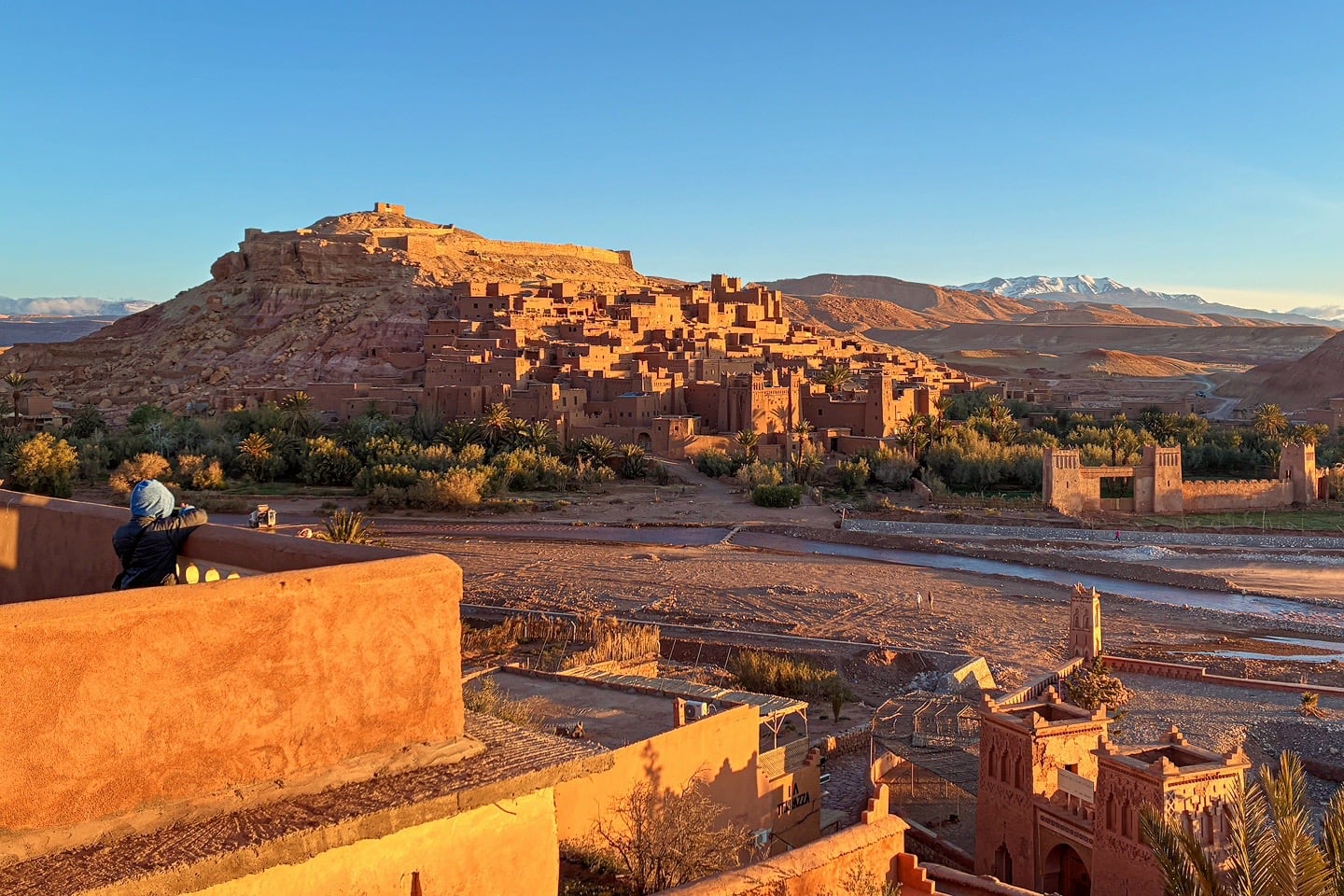
Day 4 (Tizi n’Tichka Pass to Dades Valley): Depart Marrakech at 7:30 AM with a private driver or small-group tour. You will ascend the winding Tizi n’Tichka Pass (2,260 meters) through the High Atlas Mountains. By late morning, stop at the fortified ksar of Ait Benhaddou, a famous filming location and earthen-clay masterpiece. Continue through Ouarzazate and the Valley of Roses to reach Dades Gorge for dinner and an overnight stay.
Day 5 (Todra Gorge to Merzouga Sahara): After breakfast, drive to Todra Gorge, where 300-meter limestone cliffs tower over a crystal-clear river. Following a short canyon walk, head southeast toward Erfoud and Merzouga. Around 4:30 PM, mount a camel (or take a 4×4 transfer) into the golden Erg Chebbi dunes. Watch the sunset from a high ridge before enjoying a traditional tagine dinner and Berber drumming around the campfire at your desert camp.
Days 6–8: Fes Imperial Medina & Chefchaouen
Day 6 (Ziz Valley to Fes): Wake up early for a spectacular desert sunrise, then depart north toward Fes (approximately 7–8 hours of driving). Along the way, you will pass through the palm-filled Ziz Valley and stop in the cedar forests of Azrou to spot wild Barbary macaques. Arrive in Fes by early evening and settle into your historic riad.
Day 7 (Fes el-Bali Cultural Immersion): Fes boasts the world’s largest car-free urban medina, making a certified guide essential for your morning exploration. Visit the iconic Chouara Tannery, the University of al-Qarawiyyin exterior, and the Bou Inania Madrasa. In the afternoon, watch master artisans craft intricate zellij mosaic tiles at a local pottery cooperative outside the city walls.
Day 8 (Fes to Chefchaouen): Catch a morning CTM bus or private transfer north into the Rif Mountains (3.5 to 4 hours) to reach Chefchaouen, the famous “Blue Pearl.” Spend the afternoon wandering its tranquil, blue-washed alleyways, browsing handwoven wool blankets, and hiking up to the Spanish Mosque for panoramic sunset views over the town.
Days 9–10: Rabat or Casablanca & Departure
Day 9 (Transit to the Coast): Take a morning bus or private car from Chefchaouen to Tangier or Kenitra, then connect to the ONCF rail network toward Rabat or Casablanca. If you stop in Rabat, explore the serene Kasbah of the Udayas and the Hassan Tower. In Casablanca, prioritize the monumental Hassan II Mosque, which sits dramatically on a promontory overlooking the Atlantic Ocean.
Day 10 (Final Morning & Airport Transfer): Enjoy a leisurely Moroccan breakfast of msemen flatbread, fresh orange juice, and strong coffee. Depending on your flight time, pick up last-minute souvenirs like culinary argan oil or ceramic bowls before taking the direct ONCF airport train (50 MAD / $5 USD) to Mohammed V International Airport (CMN).
3. Neighborhoods & Accommodation Tier Guide
Choosing the right neighborhood and property style dramatically shapes your experience. In historic cities like Marrakech and Fes, traditional riads—townhouses built around an interior garden courtyard—offer an oasis of calm away from bustling streets. Meanwhile, modern Ville Nouvelle districts provide wider boulevards, familiar cafés, and easy vehicle access.
Where to Stay in Marrakech, Fes & Chefchaouen
- Marrakech: Stay in Riad Zitoun or Mouassine for easy walking access to Jemaa el-Fnaa. Alternatively, choose Gueliz if you prefer contemporary boutique hotels and nightlife.
- Fes: Book a riad near Bab Bou Jeloud (the Blue Gate) or Talaa Kebira so you can easily meet drivers and navigate the main medina arteries.
- Chefchaouen: Base yourself inside the eastern Medina near Plaza Uta el-Hammam for atmospheric views and short walks to viewpoints.
| Accommodation Tier | Typical Property Style | Average Nightly Rate (MAD / USD) | Best For |
|---|---|---|---|
| Budget | Social Hostels, Simple Guesthouses, Standard Desert Tents | 200–450 MAD ($20–$45 USD) | Solo backpackers and cost-conscious travelers |
| Mid-Range | Boutique Riads with Breakfast, 3–4 Star Hotels, Private Ensuite Desert Camps | 700–1,400 MAD ($70–$140 USD) | Couples, friends, and comfort-seeking explorers |
| Luxury | Palatial 5-Star Riads, Heated Pools, Luxury Glamping Dunes | 2,500–6,000+ MAD ($250–$600+ USD) | Honeymooners and high-end cultural travelers |
4. Complete Budget, Food & Transport Cost Breakdown
Morocco remains remarkably affordable compared to Western Europe, yet costs vary widely depending on your transport choices and dining habits. For example, eating street food and riding intercity trains keeps daily expenses low, whereas hiring a private driver and dining at upscale medina restaurants increases your budget significantly. For more strategies on stretching your travel funds, review our comprehensive travel budget guide.
Intercity Transport: Trains, Buses & Private Drivers
Morocco’s state-owned ONCF railway connects Marrakech, Casablanca, Rabat, Fes, and Tangier with clean, air-conditioned trains. First-class tickets cost roughly 30% to 40% more than second class and guarantee reserved seating. However, trains do not reach the Sahara Desert or Chefchaouen. Therefore, you will need to combine rail travel with CTM or Supratours buses, or hire a private driver for the Marrakech-to-Fes desert leg.
5. Financial, Insurance & Connectivity Strategy
Protecting your finances and health abroad is just as important as booking the right riad. Because Morocco operates largely on cash in traditional markets while relying on international card networks for hotels, a smart banking and insurance setup prevents costly surprises.
Essential Financial, Insurance & Connectivity Protections
- Travel Medical Insurance & $250k Emergency Medical Evacuation Coverage: Standard domestic health plans rarely cover international hospital stays or remote desert rescues. Consequently, you should purchase comprehensive travel medical insurance that includes at least $100,000 in primary medical coverage and $250,000 in emergency medical evacuation coverage. This guarantees rapid airlift transport from remote areas like Merzouga or the High Atlas to top-tier private clinics in Casablanca or Europe if an emergency occurs.
- Zero-Foreign-Transaction-Fee Credit Cards & ATM Currency Exchange: Many riads, car rental agencies, and upscale restaurants accept Visa and Mastercard, yet standard bank cards charge a 3% foreign transaction fee on every swipe. Instead, carry a zero foreign transaction fee credit card alongside a debit card that offers ATM fee reimbursement. When withdrawing Moroccan Dirhams (MAD) at local ATMs, always decline Dynamic Currency Conversion (DCC) and choose to be charged in local MAD to lock in fair interbank currency exchange rates.
- Car Rental Collision Damage Waiver (CDW) & Deductible Protection: If you plan to self-drive through the Atlas Mountains, note that Moroccan roads feature steep switchbacks and unpredictable rural traffic. Therefore, verify that your credit card or standalone policy provides primary car rental collision damage waiver (CDW) and zero-deductible theft protection, saving you $15 to $25 per day at the rental counter.
- 5G eSIM International Data Roaming Plans: Relying on hotel Wi-Fi leaves you vulnerable when navigating winding medina alleys. Before departing home, install a 5G eSIM international data roaming plan (or purchase a local Maroc Telecom / Orange SIM at the airport) so you have uninterrupted access to offline maps, ride-hailing apps, and translation tools.
6. Cultural Etiquette, Safety & Packing Checklist
Morocco is a welcoming, hospital-hearted destination, and respecting local customs ensures warm interactions everywhere you go. Above all, dressing modestly—covering shoulders and knees in traditional neighborhoods and rural villages—demonstrates cultural awareness and reduces unwanted attention.
Safety Tips and Common Mistakes to Avoid
While violent crime against tourists is rare, petty scams in busy medinas require vigilance. For instance, politely decline unsolicited “guides” who tell you a street or museum is closed, as they often lead visitors to commission-based carpet shops. Similarly, always agree on a taxi fare before stepping inside if the driver refuses to turn on the meter (compteur). For a deeper look at staying secure on the road, consult our international destination safety checklist.
Smart Packing Checklist for 10 Days
- Breathable Layers: Linen shirts, lightweight trousers, and a packable down jacket for chilly Sahara nights.
- Footwear: Broken-in walking shoes with good grip for uneven cobblestones and steep medina stairs.
- Daypack Essentials: Reusable water bottle, high-SPF sunscreen, sunglasses, and a scarf for desert wind protection.
- Health Kit: Hand sanitizer, electrolyte packets, motion-sickness tablets for mountain passes, and basic prescriptions.
7. Local Dining, Hidden Gems & Practical FAQs
Moroccan cuisine extends far beyond standard chicken tagine. During your Morocco 10 day itinerary, seek out regional specialties such as tanjia (slow-cooked beef in a clay urn) in Marrakech, pastilla (sweet-and-savory filo pie) in Fes, and freshly grilled sardines along the Atlantic coast. Furthermore, visiting local neighborhood bakeries (ferran) in the morning lets you taste warm bread straight from wood-fired ovens.
Practical Frequently Asked Questions
Is 10 days enough time for a Morocco itinerary?
Yes, 10 days is the sweet spot for experiencing Morocco’s top highlights without feeling rushed. Specifically, it allows you to explore two imperial cities (Marrakech and Fes), cross the High Atlas Mountains, spend a night in the Sahara Desert, and visit Chefchaouen. However, if you want to add coastal towns like Essaouira, you would need 12 to 14 days.
How much cash should I carry in Morocco?
You should keep roughly 500 to 1,000 MAD ($50 to $100 USD) in small bills on hand each day. While riads and larger restaurants accept credit cards, souk vendors, street food stalls, petit taxis, and tour guides operate strictly in cash. Therefore, withdrawing cash from bank-affiliated ATMs in major cities is the safest approach.
Can I drink tap water in Morocco?
No, visitors should avoid drinking tap water in Morocco to prevent stomach upset. Instead, stick to sealed bottled water, which is inexpensive and widely available at corner shops for 5 to 10 MAD. In addition, use bottled water when brushing your teeth in smaller desert towns.
Is it better to book a private driver or take public transport?
The best strategy is a hybrid approach that matches each leg of the journey. For example, ONCF trains and CTM buses are fast, comfortable, and budget-friendly between Marrakech, Fes, Chefchaouen, and Casablanca. In contrast, hiring a private driver or joining a small-group tour is far more practical for the 3-day High Atlas and Sahara Desert crossing.
What languages are spoken in Morocco?
Arabic (specifically the Moroccan dialect, Darija) and Amazigh (Berber) are the official languages. However, French is widely spoken in business, dining, and transit, while English is increasingly common among younger generations and hospitality staff in major tourist hubs.
Final Thoughts on Your Morocco 10 Day Itinerary
Crafting an unforgettable Morocco 10 day itinerary comes down to smart pacing, cultural curiosity, and solid financial preparation. By combining high-speed rail with a guided desert crossing, staying in authentic riads, and securing proper travel medical insurance and zero-fee banking tools, you will navigate the kingdom with complete confidence. Pack light, keep an open mind, and prepare for one of the most rewarding journeys in North Africa.
Ultimately, by following this comprehensive blueprint, your Morocco 10 day itinerary will deliver authentic cultural experiences, predictable daily costs, and smooth logistics from start to finish.
Ultimately, by following this comprehensive blueprint, your Morocco 10 day itinerary will deliver authentic cultural experiences, predictable daily costs, and smooth logistics from start to finish.