
Determining the best time to visit Morocco depends on how you balance mild temperatures, crowd levels, and seasonal accommodation rates across its coast, mountains, and desert. Most experienced travelers find that spring (March through May) and autumn (September through November) deliver the most comfortable weather for exploring imperial cities and crossing the Sahara. However, winter brings crisp sunshine to Marrakech and Agadir, while summer rewards coastal visitors who want refreshing Atlantic breezes.
The best time to visit Morocco is during spring (March–May) and autumn (September–November), when daytime temperatures average 20°C–28°C (68°F–82°F) across Marrakech, Fes, and the Sahara Desert. During these shoulder months, travelers enjoy clear skies, manageable crowds, and moderate riad rates before peak winter holidays or scorching summer heat arrive.
At-a-Glance Morocco Planning Summary
- Peak Comfort Windows: Mid-March to May and mid-September to November.
- Realistic Daily Budget: 550–900 MAD ($55–$90 USD) for budget travelers; 1,400–2,600 MAD ($140–$260 USD) for mid-range; 4,000+ MAD ($400+ USD) for luxury riads.
- Key Transit Backbone: ONCF high-speed Al Boraq trains, CTM and Supratours coaches, and metered petit taxis.
- Financial & Safety Essentials: Carry a zero foreign transaction fee credit card, secure travel medical insurance with $250,000 emergency evacuation coverage, and activate an international 5G eSIM before arrival.
1. Seasonal Overview: Choosing the Best Time to Visit Morocco
Morocco spans four distinct climate zones, which means weather conditions shift dramatically between the Atlantic Ocean, the High Atlas Mountains, and the Sahara Desert. Consequently, timing your trip around regional microclimates is far more effective than relying on a single national forecast. In addition, major cultural events such as Ramadan—whose dates shift earlier by roughly 11 days each year—can influence restaurant hours and domestic travel demand.
Spring (March to May): Lush Valleys and Ideal Sightseeing
Spring is widely regarded as the best time to visit Morocco because wildflowers carpet the Rif and Atlas valleys while daytime highs hover between 22°C and 27°C (72°F–81°F). Furthermore, snowmelt feeds dramatic waterfalls such as Ouzoud, and desert nights in Merzouga remain comfortably cool rather than freezing. Therefore, photographers and hikers can spend full days outdoors without battling midday heat exhaustion.
However, April coincides with European Easter holidays, which pushes boutique riad prices up by 20% to 35% in Marrakech and Essaouira. As a result, booking your preferred courtyard rooms at least ten weeks in advance is essential if you plan to travel during late March or April. Meanwhile, May offers slightly warmer afternoons and fewer school-holiday crowds.
Autumn (September to November): Golden Light and Harvest Season
Autumn rivals spring as a premier travel window, especially from late September through early November. First, September can still feel hot in Marrakech and Zagora, with afternoons occasionally reaching 33°C (91°F). Next, October ushers in crisp mornings, golden desert light, and comfortable 25°C (77°F) afternoons across Fes, Meknes, and Rabat.
In addition, October marks the date harvest in the Draa and Ziz valleys, bringing vibrant local markets to southern oasis towns. Consequently, travelers who prioritize cultural immersion and desert camping find October and early November unbeatable. By late November, however, higher Atlas passes begin seeing early frosts.
Winter (December to February) and Summer (June to August)
Winter brings mild 18°C–21°C (64°F–70°F) afternoons to Marrakech and sunny beach walks to Agadir, although nights drop sharply to 5°C–8°C (41°F–46°F). Meanwhile, the High Atlas peaks receive heavy snow, creating scenic backdrops for day trips from Marrakech. Conversely, summer temperatures soar past 40°C (104°F) in Marrakech, Fes, and the Sahara, making midday sightseeing grueling. Therefore, summer travelers should focus on Atlantic coastal hubs like Essaouira, Tangier, and Asilah, where ocean winds keep highs near 26°C (79°F).
- Best Overall Months: April, May, and October for balanced temperatures nationwide.
- Best Budget Months: January, February, and late June (outside major holidays).
- Best Beach & Surf Months: June through September along the Atlantic coast.
- Best Desert Trekking Months: March, April, October, and November.

Best time to visit Morocco: 2. Regional Climate Blueprint: Coast, Imperial Cities & Sahara
Understanding how Morocco’s geography shapes daily temperatures helps you build a seamless itinerary. For example, a morning that starts cool and breezy in Essaouira can end in dry desert heat just four hours inland. Therefore, structuring your route by region prevents weather-related fatigue.
Imperial Cities (Marrakech, Fes, Meknes, Rabat)
Marrakech and Fes sit inland, which means they experience sharper seasonal swings than coastal cities. During spring and autumn, morning walks through the medina at 8:30 AM feel refreshing at 16°C (61°F), while afternoons peak near 26°C (79°F). Consequently, you can explore intricate palaces like Bahia Palace or historic madrasas without seeking constant shade.
In contrast, July and August require an early-bird schedule: tour outdoor sites between 7:30 AM and 11:00 AM, retreat to a shaded riad pool until 4:30 PM, and dine on rooftop terraces after sunset. Meanwhile, Rabat enjoys moderating Atlantic breezes year-round, making it pleasant even in mid-summer.
The Sahara Desert (Merzouga & Zagora)
The Sahara experiences extreme diurnal temperature swings, meaning scorching days can be followed by chilly nights. Specifically, between October and April, daytime highs sit between 20°C and 28°C (68°F–82°F), which is ideal for camel treks and 4×4 dune excursions. However, winter nights in December and January can plunge near 2°C (36°F), so insulated layers are mandatory inside desert camps.
From June through August, desert temperatures regularly exceed 44°C (111°F), and most reputable camp operators pause midday excursions. As a result, experienced planners avoid the Sahara during peak summer.
Atlantic Coast & Rif Mountains (Essaouira, Tangier, Chefchaouen)
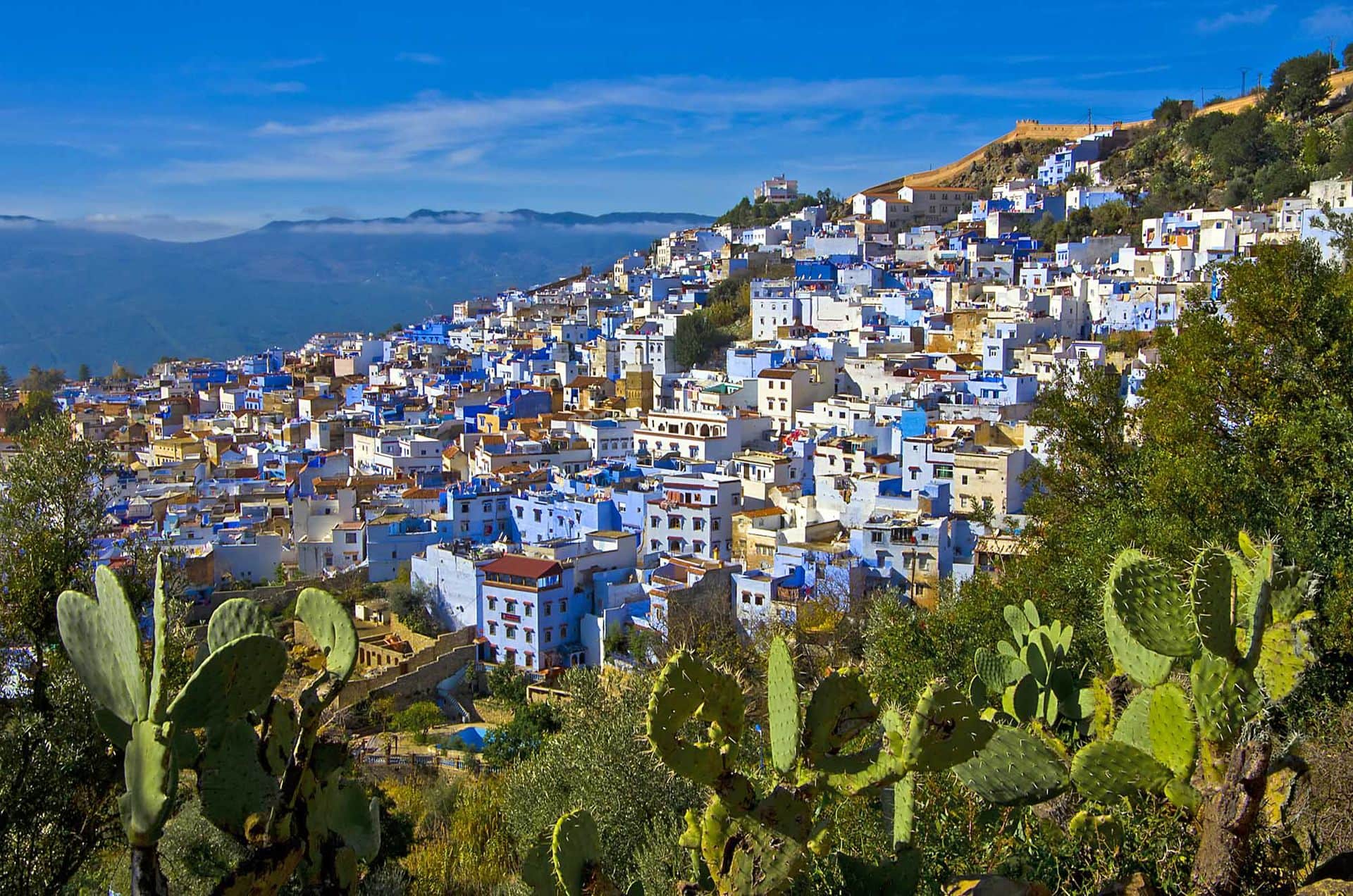
Essaouira is famous for its steady trade winds, which keep summer temperatures around 24°C–26°C (75°F–79°F) while cooling winter afternoons to 18°C (64°F). Meanwhile, Tangier and Chefchaouen in the north receive more winter rainfall between December and February. Therefore, visiting the Blue Pearl of Chefchaouen between April and October ensures dry, bright conditions for hiking the Rif trails.
3. Neighborhoods & Accommodation Tiers by Season
Accommodation pricing in Morocco fluctuates sharply between low, shoulder, and peak holiday periods. In particular, historic riads—traditional courtyard homes converted into guesthouses—offer intimate hospitality, whereas modern hotels in Gueliz or Ville Nouvelle provide elevators, reliable heating, and easy taxi access. Choosing the right neighborhood also saves transit time and reduces stress.
Budget Stays: Hostels & Simple Guesthouses
Budget travelers can find clean, sociable hostels in Marrakech’s Medina, Fes el-Bali, and Chefchaouen for 150 to 350 MAD ($15–$35 USD) per night. During winter, however, travelers should verify that rooms include space heaters, because traditional thick-walled riads can feel damp at night. In addition, booking directly or confirming breakfast inclusion often saves 50 MAD ($5 USD) each morning.
Mid-Range Riads & Boutique Hotels
Mid-range riads priced between 750 and 1,600 MAD ($75–$160 USD) per night deliver the quintessential Moroccan experience, complete with zellij tilework, plunge pools, and homemade breakfasts. In Marrakech, neighborhoods like Mouassine and Riad Zitoun offer quiet alleys within a ten-minute walk of Jemaa el-Fnaa. Similarly, Fes el-Bali near Bab Bou Jeloud gives visitors easy access to taxis and restaurants.
Luxury Riads & 5-Star Resorts
Luxury riads and palatial resorts in Marrakech’s Palmeraie or Hivernage district range from 3,200 to 9,500+ MAD ($320–$950+ USD) per night during peak spring and Christmas weeks. Consequently, travelers seeking five-star spas at lower rates should target January, February, or late June, when luxury properties frequently discount suites by 25% to 40%.
| Season | Weather Profile | Budget Tier (MAD / USD) | Mid-Range Riad (MAD / USD) | Luxury Resort (MAD / USD) |
|---|---|---|---|---|
| Spring (Mar–May) | 22°C–27°C, sunny, mild nights | 200–350 MAD ($20–$35) | 950–1,600 MAD ($95–$160) | 4,000–8,500 MAD ($400–$850) |
| Summer (Jun–Aug) | 35°C–44°C inland; 25°C coast | 150–280 MAD ($15–$28) | 650–1,100 MAD ($65–$110) | 2,800–6,000 MAD ($280–$600) |
| Autumn (Sep–Nov) | 21°C–29°C, crisp desert air | 200–350 MAD ($20–$35) | 950–1,650 MAD ($95–$165) | 4,200–9,000 MAD ($420–$900) |
| Winter (Dec–Feb) | 16°C–21°C days; 5°C–8°C nights | 160–300 MAD ($16–$30) | 750–1,300 MAD ($75–$130) | 3,200–7,500 MAD ($320–$750) |
4. Complete Budget, Food & Transport Cost Breakdown
Planning realistic daily expenses helps you enjoy Morocco without constant haggling stress. While street food and public trains remain remarkably affordable, private drivers and guided desert excursions add up quickly. For a deeper breakdown of daily spending across regions, check our comprehensive travel budget guide.
Intercity Rail: ONCF & Al Boraq High-Speed Trains
Morocco’s state rail operator, ONCF, connects Tangier, Rabat, Casablanca, Marrakech, and Fes with punctual, air-conditioned trains. Specifically, the Al Boraq high-speed line links Tangier to Casablanca in just 2 hours and 10 minutes, with first-class tickets costing roughly 220–300 MAD ($22–$30 USD). Meanwhile, standard first-class trains between Casablanca and Marrakech cost around 195 MAD ($19.50 USD) and include reserved seating.
Coaches, Petit Taxis & Private Drivers
Where rail tracks end—such as Chefchaouen, Essaouira, and Merzouga—CTM and Supratours coaches provide reliable, luggage-checked service for 90 to 240 MAD ($9–$24 USD) depending on distance. Inside cities, metered petit taxis cost 15 to 40 MAD ($1.50–$4 USD) for short rides; however, you should always ask the driver to turn on the meter before departing. Conversely, hiring a private driver with an air-conditioned vehicle for multi-day Atlas and Sahara loops averages 1,400 to 2,200 MAD ($140–$220 USD) per day.
| Expense Category | Typical Item / Route | Local Price (MAD) | Approx. USD |
|---|---|---|---|
| ONCF Train (1st Class) | Casablanca to Marrakech | 195 MAD | $19.50 USD |
| CTM / Supratours Bus | Marrakech to Essaouira | 90–110 MAD | $9–$11 USD |
| Petit Taxi (City Ride) | Medina to Gueliz / Ville Nouvelle | 15–35 MAD | $1.50–$3.50 USD |
| Street Food Meal | Harira soup, msemen, or grilled skewers | 30–60 MAD | $3–$6 USD |
| Mid-Range Riad Dinner | Three-course tagine & mint tea | 180–300 MAD | $18–$30 USD |
| Major Monument Entry | Bahia Palace or Majorelle Garden | 70–160 MAD | $7–$16 USD |
5. High-CPC Financial, Insurance & Connectivity Strategy
Smart financial and insurance preparation protects your trip budget from unexpected medical bills, currency markups, and rental car deductibles. Because Morocco’s healthcare system mixes modern private clinics in Casablanca and Marrakech with limited rural facilities in the Atlas and Sahara, proactive coverage is non-negotiable.
Essential Travel Protection & Banking Checklist
1. Travel Medical Insurance & $250k Emergency Evacuation Coverage
Before departing, secure comprehensive travel medical insurance that includes at least $100,000 in emergency medical treatment and $250,000 in emergency medical evacuation coverage. If you suffer a fracture while trekking in the High Atlas or experience severe dehydration in the Sahara, private ambulance transport or air evacuation to Casablanca or Europe can easily exceed $35,000 out of pocket. Furthermore, verify that your policy covers camel treks, quad biking, and high-altitude hiking up to 4,000 meters if you plan to climb Mount Toubkal.
2. Zero-Foreign-Transaction-Fee Credit Cards & ATM Strategy
Cash remains king in Moroccan souks, taxis, and small cafes, yet paying with the right cards at hotels and ATMs saves hundreds of dollars. Carry a zero foreign transaction fee credit card for riad deposits, train tickets, and upscale restaurants, and pair it with a debit card that offers ATM fee reimbursement. Always decline Dynamic Currency Conversion (DCC) at ATMs and card terminals—choose to be billed in Moroccan Dirhams (MAD) rather than your home currency to avoid hidden 4%–7% exchange markups.
3. Car Rental Collision Damage Waiver (CDW) & Deductible Protection
If you rent a car to explore the Dades Gorge or Atlantic coast, confirm whether your credit card provides primary Collision Damage Waiver (CDW) coverage in Morocco. Many standard policies exclude off-road driving on unpaved desert tracks, which means a cracked windshield or undercarriage scrape can trigger a $1,200 deductible. Therefore, photograph every panel at pickup and carry written proof of your deductible protection.
4. 5G eSIM International Data Roaming Plans
Relying on home-carrier roaming can cost $10 to $15 per day, whereas installing an international 5G eSIM data plan before takeoff gives you instant Google Maps navigation, WhatsApp messaging with riad hosts, and ride-hailing access upon landing. Major cities enjoy fast 4G/5G speeds, though signal naturally drops inside deep desert dunes.
6. Cultural Etiquette, Packing Checklist & Common Mistakes
Respecting local customs enhances every interaction in Morocco, from bargaining in Fes tanneries to sharing mint tea with Berber hosts. Moreover, packing for Morocco’s sharp day-to-night temperature swings prevents discomfort. For additional preparation tips, review our destination safety checklist.
Cultural Etiquette & Dress Guidelines
Morocco is a welcoming, predominantly Muslim country where modest dress is appreciated, especially outside beach resorts. Specifically, wearing breathable linen trousers, midi skirts, and loose-sleeved tops keeps you cool in the sun while showing respect in historic medinas and rural villages. Always ask permission before photographing local artisans or shopkeepers, and use your right hand when accepting food or tea.
Seasonal Packing Checklist
- Breathable Layers: Lightweight cotton or linen shirts paired with a packable windbreaker for breezy evenings.
- Winter & Desert Warmth: A packable down jacket, thermal base layer, and warm socks for December–February nights.
- Footwear: Closed-toe walking shoes with good grip for uneven cobblestone medina alleys.
- Sun & Health Kit: High-SPF sunscreen, polarized sunglasses, electrolyte packets, and hand sanitizer.
Common Mistakes to Avoid
First, many travelers underestimate travel times between cities; driving from Marrakech to Merzouga takes nine hours across winding mountain passes, so plan an overnight stop in the Dades Valley. Second, avoid exchanging large sums of cash at airport kiosks, which offer poor rates compared to city-center bank ATMs. Finally, never book unmarked taxis without agreeing on a fare or confirming the meter is active.
For official background on Morocco’s protected medinas and historic sites, consult the UNESCO World Heritage official guide.
7. Local Dining, Hidden Gems & Practical FAQs
Moroccan cuisine shines brightest when you follow seasonal ingredients, from sweet spring artichokes and broad beans to autumn pomegranates and dates. Beyond classic lamb tagine and Friday couscous, seek out slow-roasted tangia in Marrakech, seafood pastilla in Essaouira, and freshly pressed orange juice in local squares. Meanwhile, quieter destinations like Taroudant, Asilah, and the Oasis of Skoura reward travelers who step off the standard tourist circuit.
What is the absolute best time to visit Morocco for first-time travelers?
April, May, and October offer the best overall balance of warm sunshine, cool nights, and manageable crowds for first-time visitors. During these months, you can comfortably explore Marrakech, Fes, Chefchaouen, and the Sahara Desert without facing extreme heat or winter frost. Additionally, most mountain passes and desert camps operate at full capacity.
Is Morocco too hot to visit in July and August?
Inland cities like Marrakech and Fes regularly exceed 40°C (104°F) in July and August, which makes midday sightseeing uncomfortable. However, the Atlantic coast—including Essaouira, Tangier, and Agadir—stays pleasantly breezy around 25°C (77°F). Therefore, summer travelers should prioritize coastal towns and schedule inland walks early in the morning.
How does Ramadan affect travel in Morocco?
During Ramadan, local cafes and street stalls in residential neighborhoods close during daylight hours, though major tourist restaurants and hotels continue serving meals. Furthermore, evenings come alive after sunset with festive markets and family gatherings. Consequently, travelers simply need to plan daytime lunches near tourist hubs and dress modestly.
Do I need cash, or can I use credit cards everywhere in Morocco?
You will need Moroccan Dirhams (MAD) in cash for souks, petit taxis, tips, and small family-run eateries. Meanwhile, mid-range riads, upscale restaurants, ONCF train stations, and supermarkets widely accept Visa and Mastercard. Using a zero foreign transaction fee credit card alongside ATM withdrawals gives you the best exchange rates.
Is tap water safe to drink in Morocco?
Most travelers should stick to sealed bottled water or filtered water in Morocco to avoid mild stomach upset from unfamiliar mineral content. In addition, use bottled water when brushing your teeth in rural desert camps. Carrying a reusable bottle with a built-in filter is both eco-friendly and convenient.
Conclusion: Planning Your Ideal Moroccan Journey
Choosing the best time to visit Morocco comes down to matching your itinerary with the country’s diverse seasons. Whether you time your trip for spring wildflowers in the Atlas Mountains, golden October sunsets over the Sahara, or mild winter afternoons in Marrakech, thoughtful preparation ensures a smooth and rewarding adventure. Pair seasonal timing with solid travel medical insurance, a zero-fee banking setup, and a flexible pace, and you will experience Morocco at its absolute finest.
Ultimately, by following this comprehensive blueprint, your best time to visit Morocco will deliver authentic cultural experiences, predictable daily costs, and smooth logistics from start to finish.
Ultimately, by following this comprehensive blueprint, your best time to visit Morocco will deliver authentic cultural experiences, predictable daily costs, and smooth logistics from start to finish.