
luxury riads in Marrakech offer travelers an extraordinary blend of centuries-old Moroccan craftsmanship, intimate courtyard serenity, and world-class hospitality. Behind unassuming terracotta walls in the historic medina, these restored mansions reveal fragrant orange-blossom gardens, hand-carved cedarwood ceilings, and heated marble plunge pools. Whether you are planning a romantic escape or a cultural expedition, understanding how to select the right neighborhood, seasonal timing, and financial protections will transform your stay into an effortless experience.
The best luxury riads in Marrakech are concentrated in Mouassine, Dar El Bacha, and the Kasbah, with nightly rates ranging from 2,800 to 9,500 MAD ($280–$950 USD). For optimal weather and fewer crowds, visit between March and May or September and November, and always carry comprehensive travel medical insurance.
At-a-Glance Marrakech Planning Summary
- Ideal Stay Duration: 4 to 6 nights (split between a medina riad and a Palmeraie or Hivernage resort).
- Peak Value Seasons: March–May and September–November for mild 22°C–28°C (72°F–82°F) daytime temperatures.
- Realistic Nightly Budget: 1,200–2,500 MAD ($120–$250) for boutique mid-range; 2,800–9,500+ MAD ($280–$950+) for 5-star luxury.
- Essential Financial Prep: Carry a zero-foreign-transaction-fee credit card, 500–1,000 MAD in cash for souks, and $250,000+ emergency medical evacuation coverage.
1. Overview, Timing & Strategic Planning for Luxury Riads in Marrakech
Selecting the right time to experience luxury riads in Marrakech is just as important as choosing the property itself. Because Marrakech sits at the foothills of the High Atlas Mountains, the city experiences dramatic seasonal shifts that directly affect both outdoor sightseeing and courtyard comfort. Furthermore, understanding local holiday calendars helps visitors avoid unexpected closures or inflated seasonal surcharges.
Best Months and Seasonal Weather Breakdown
Spring (March through May) and autumn (September through November) represent the undisputed golden windows for visiting Marrakech. During these months, daytime temperatures hover comfortably between 22°C and 29°C (72°F to 84°F), which allows guests to enjoy rooftop breakfasts and afternoon walking tours without heat exhaustion. In addition, evening temperatures dip to a pleasant 14°C–18°C (57°F–64°F), making al fresco courtyard dining thoroughly enjoyable.
In contrast, summer (June through August) brings intense desert heat that regularly exceeds 40°C (104°F) by mid-afternoon. Consequently, sightseeing in the uncovered souks becomes exhausting between 12:00 PM and 5:00 PM. However, travelers who book 5-star resorts in the Palmeraie or Hivernage during summer often secure 30% to 40% lower nightly rates and can spend peak heat hours beside expansive, shaded swimming pools.
Winter (December through February) offers crisp, sunny days around 18°C–21°C (64°F–70°F) paired with chilly nights that can drop to 6°C (43°F). Therefore, if you travel in winter, you should specifically verify that your chosen riad features heated plunge pools, working fireplaces, and central climate control. Many historic properties rely on thick earthen walls for insulation, which can feel damp in January without proper heating.
Crowd Patterns and Cultural Calendar
Crowd levels in the medina fluctuate sharply around European school holidays, Easter, and the Christmas–New Year period. During these peak weeks, the finest luxury riads in Marrakech sell out four to six months in advance. As a result, early reservations are essential if you want a specific suite with a private terrace.
Meanwhile, visiting during Ramadan offers a deeply atmospheric cultural perspective, though it requires minor logistical adjustments. Many local restaurants close during daylight hours, and alcohol service is restricted to licensed international hotels. Nevertheless, the medina comes alive after sunset with festive communal meals and vibrant night markets, and historic monuments remain open on slightly shortened schedules.
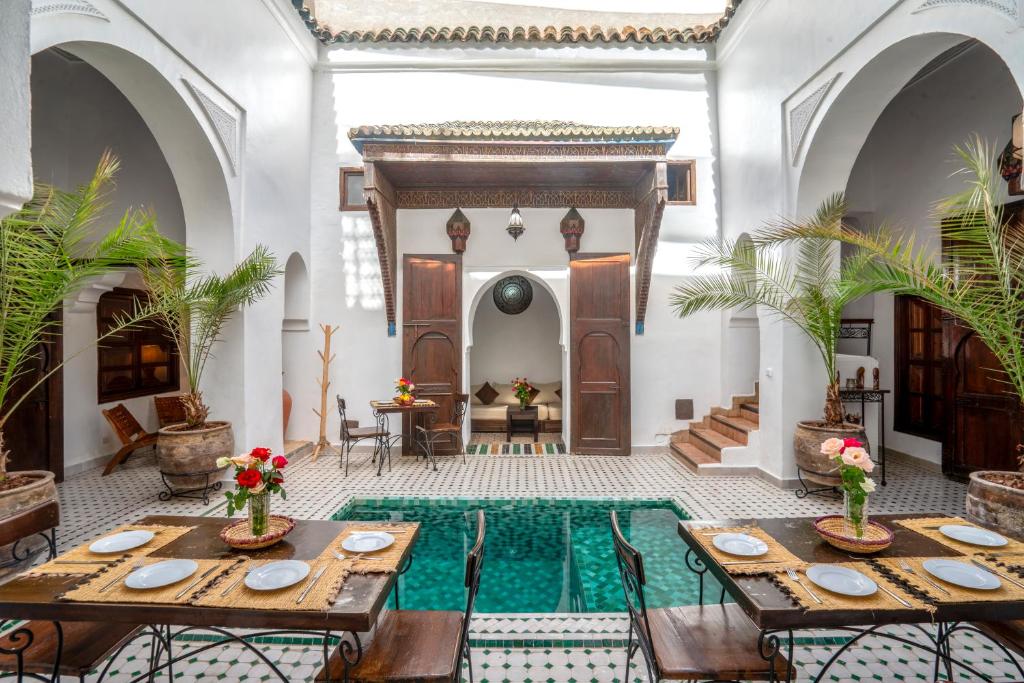
Luxury riads in Marrakech: 2. Detailed 3-Day Marrakech Blueprint: Morning, Afternoon & Evening
Navigating Marrakech smoothly requires pacing your energy between the sensory intensity of the medina and the restorative calm of your accommodation. Below is a tested three-day itinerary designed to minimize transit friction while maximizing cultural immersion. For broader regional context, you can also review our Morocco travel budget guide before finalizing your route.
Day 1: Historic Palaces, Mouassine & Sunset Rooftops
- Morning (8:30 AM – 12:30 PM): Begin at Bahia Palace right when gates open at 9:00 AM to photograph the painted cedarwood ceilings without crowds. Next, walk ten minutes south to the Saadian Tombs and El Badi Palace, where storks nest along the ruined ramparts.
- Afternoon (12:30 PM – 5:00 PM): Enjoy a leisurely courtyard lunch in the Kasbah, followed by a shaded walk through the spice stalls of Rahba Kedima. Afterward, return to your riad for a traditional 60-minute hammam scrub and argan oil massage.
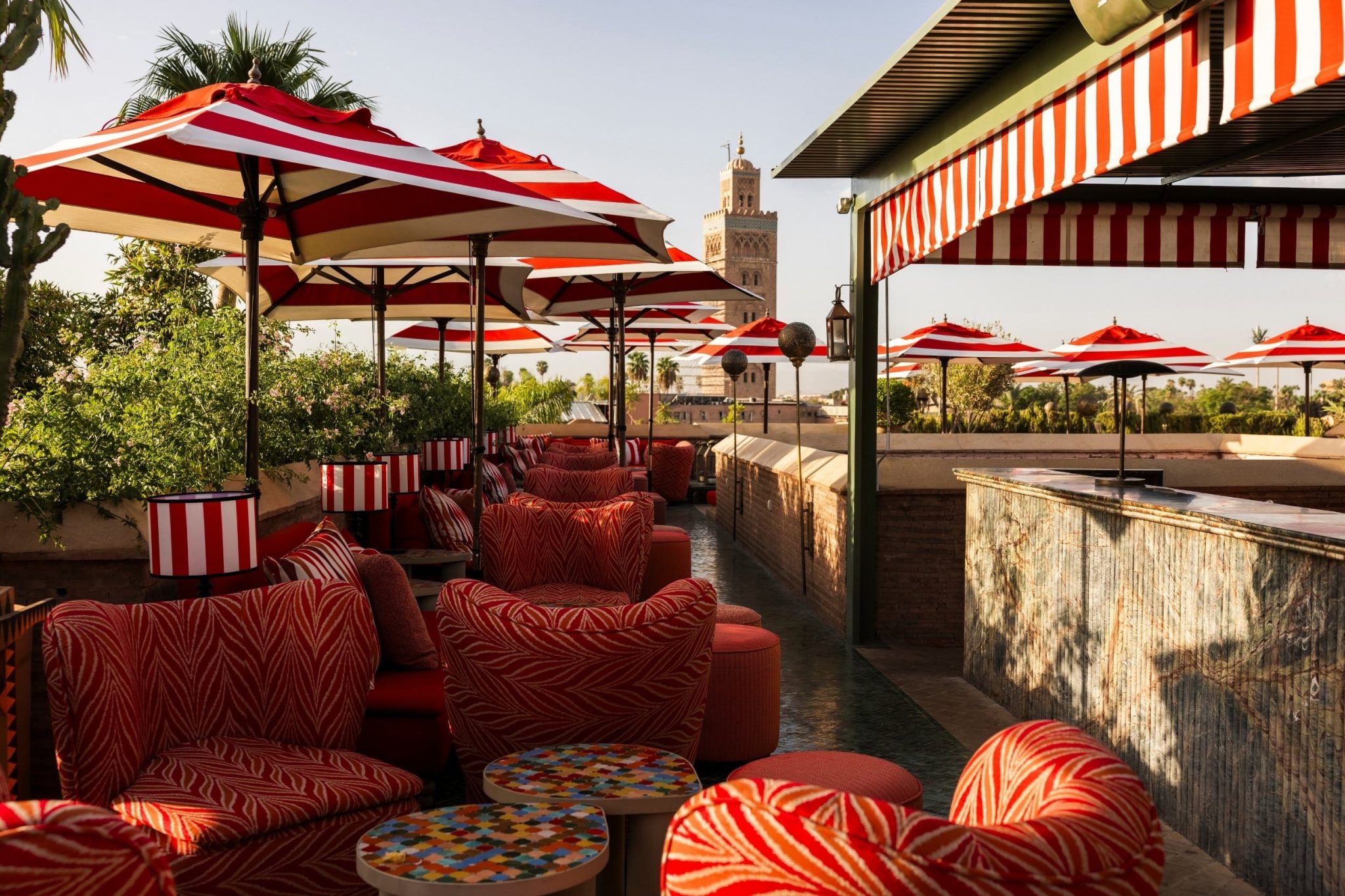
- Evening (5:30 PM – 9:30 PM): Ascend to a panoramic rooftop terrace overlooking Jemaa el-Fnaa as the call to prayer echoes across the square. Finally, dine on slow-cooked lamb tangia in a quiet Mouassine courtyard.
Day 2: Gardens, Art Museums & Northern Souks
- Morning (8:00 AM – 12:00 PM): Take a 15-minute petit taxi to Jardin Majorelle and the adjacent Yves Saint Laurent Museum, arriving at opening time to beat tour buses. The cobalt-blue architecture and desert cacti provide striking morning light.
- Afternoon (12:30 PM – 4:30 PM): Return to the medina to explore the Ben Youssef Madrasa, an architectural masterpiece of carved stucco and zellige mosaic work. Subsequently, browse the leatherworkers and brass lanterns in the northern souks.
- Evening (5:30 PM – 9:30 PM): Stroll through the modern Gueliz district for contemporary Moroccan art galleries and a refined dinner featuring local Meknes wines.
Day 3: Atlas Foothills or Palmeraie Retreat
- Morning (9:00 AM – 1:00 PM): Hire a licensed private driver for a 45-minute excursion to the Ourika Valley or the Agafay Desert. Along the way, visit a local women-led argan cooperative to observe traditional cold-pressing techniques.
- Afternoon (1:30 PM – 5:30 PM): Spend the afternoon lounging beside a heated pool at a 5-star resort in the Palmeraie, enjoying views of snow-capped peaks in winter and spring.
- Evening (6:00 PM – 9:30 PM): Conclude your trip with a private cooking class at your riad, learning how to balance preserved lemons, saffron, and ras el hanout.

3. Neighborhoods & Accommodation Tier Guide
Choosing between a historic medina riad and a sprawling 5-star resort outside the city walls depends on your travel style, mobility preferences, and desired atmosphere. The medina itself is a UNESCO World Heritage official guide-listed labyrinth where vehicles cannot enter narrow pedestrian alleys. In contrast, outer districts such as Hivernage and the Palmeraie offer direct car access, expansive grounds, and resort-scale amenities.
Top Medina Neighborhoods for Luxury Riads
Mouassine and Dar El Bacha are widely considered the most prestigious addresses inside the medina. These central quarters sit just north of Jemaa el-Fnaa, yet their winding alleys remain remarkably quiet. Moreover, they house Marrakech’s finest antique boutiques, art galleries, and Michelin-caliber Moroccan restaurants within a five-minute walk.
The Kasbah and Mellah lie south of the main square near the Royal Palace. This area appeals to travelers who prefer wider streets, easier taxi drop-off points, and immediate proximity to Bahia Palace and the Saadian Tombs. Consequently, guests with rolling luggage or mobility considerations often find the Kasbah far more convenient than the deeper northern medina.
Hivernage and Palmeraie 5-Star Resorts
Hivernage is a leafy, upscale boulevard district located just west of the medina walls. It features grand 5-star palace hotels, manicured palm avenues, and effortless 10-minute taxi access to both the historic center and Gueliz. Meanwhile, the Palmeraie lies 20 minutes northeast of the city, offering serene oasis resorts set amid thousands of date palms—ideal for families and travelers seeking total seclusion.
| Accommodation Tier | Typical Nightly Rate (MAD / USD) | Key Amenities & Architecture | Best Neighborhoods |
|---|---|---|---|
| Boutique Mid-Range Riad | 1,200 – 2,400 MAD ($120 – $240) | 6–10 rooms, courtyard plunge pool, homemade breakfast, rooftop terrace | Riad Zitoun, Kasbah, Kennaria |
| Luxury Medina Riad | 2,800 – 6,500 MAD ($280 – $650) | Private butler service, heated pool, in-house hammam, airport transfers | Mouassine, Dar El Bacha, Kasbah |
| Ultra-Luxury Palace & 5-Star Resort | 6,800 – 18,000+ MAD ($680 – $1,800+) | Multi-acre gardens, Olympic pools, Michelin dining, private villas | Hivernage, Palmeraie, Bab Jdid |
4. Complete Budget, Food & Transport Breakdown
Understanding realistic local pricing in Moroccan Dirhams (MAD) protects you from overpaying for taxis, guides, and dining. At an approximate exchange rate of 10 MAD to $1 USD, Marrakech offers exceptional value compared to European capitals, though luxury dining and private transfers match international 5-star pricing.
Intercity Rail, Buses, Taxis & Private Transfers
For travelers arriving from Casablanca, Rabat, or Tangier, the ONCF rail network provides reliable, air-conditioned first-class train service directly to Marrakech’s modern central station in Gueliz. Alternatively, CTM and Supratours operate comfortable intercity coaches connecting Marrakech with Essaouira, Ouarzazate, and Agadir. Inside the city, beige petit taxis handle short hops for 20 to 40 MAD ($2–$4), provided you insist on using the meter (compteur) before departing.
However, if you are staying at one of the luxury riads in Marrakech deep inside the medina, always arrange a private riad airport transfer. A riad-dispatched driver will meet you at Marrakech Menara Airport (RAK), coordinate with a luggage porter at the nearest medina gate, and escort you directly to your courtyard door—eliminating navigation stress.

5. High-CPC Financial, Insurance & Connectivity Strategy
Securing your trip financially before departing is just as critical as selecting the right suite. Because Morocco operates on a partially closed currency (the Moroccan Dirham) and high-end medical facilities in Marrakech are private, proactive preparation prevents costly surprises.
Essential Travel Protection & Banking Checklist
- Travel Medical Insurance & $250k Emergency Medical Evacuation Coverage: While Marrakech has reputable private clinics, complex surgical emergencies or air ambulance transfers to Europe require substantial upfront guarantees. Therefore, purchase a comprehensive travel medical insurance policy that includes at least $100,000 in primary medical coverage and $250,000 in emergency medical evacuation coverage.
- Zero-Foreign-Transaction-Fee Credit Cards & ATM Currency Exchange: Luxury riads, 5-star resorts, and upscale restaurants accept Visa and Mastercard, yet standard bank cards often charge a 3% foreign transaction fee. Consequently, you should carry a zero-foreign-transaction-fee credit card paired with a debit card that offers global ATM fee reimbursement. Always decline Dynamic Currency Conversion (DCC) at ATMs and card terminals, choosing to be billed in Moroccan Dirhams (MAD) rather than your home currency.
- Car Rental Collision Damage Waiver (CDW) & Deductible Protection: If you plan to rent a vehicle for day trips to the High Atlas Mountains or Essaouira, verify whether your premium credit card provides primary Collision Damage Waiver (CDW) coverage in Morocco. Otherwise, purchase zero-deductible super-CDW protection directly, as minor bumper scrapes in narrow rural towns are common.
- 5G eSIM International Data Roaming Plans: Relying on riad Wi-Fi alone leaves you disconnected while navigating the medina’s winding alleys. Instead, install a 5G eSIM international data roaming plan prior to landing so you have instant access to offline maps, ride-hailing apps, and digital translation tools from the moment you clear customs.
6. Cultural Etiquette, Safety & Packing Checklist
Marrakech is a welcoming, hospitable city, and respecting local customs ensures warm interactions wherever you go. Before departing, consult our Marrakech safety checklist for detailed neighborhood-by-neighborhood guidance.
Respectful Dress, Photography & Tipping
Inside luxury riads in Marrakech and 5-star resorts, resort wear and swimwear are completely appropriate. However, when stepping into the medina, travelers should dress modestly by covering shoulders and knees—lightweight linen trousers, maxi dresses, and breathable cotton shirts work wonderfully. Furthermore, always ask permission before photographing local artisans or street performers, as candid portraits without consent are considered intrusive.
Tipping is deeply ingrained in Moroccan hospitality. In restaurants, leaving 10% of the bill in cash is standard, while riad porters and housekeeping staff appreciate 20 to 50 MAD ($2–$5) per day. For private drivers on full-day excursions, a tip of 150 to 250 MAD ($15–$25) reflects generous appreciation.
Essential Packing Checklist & Common Mistakes
- Closed-Toe Walking Shoes: Medina cobblestones are uneven and occasionally slick; leave delicate heels for resort dinners.
- Small-Denomination Cash: Carry 20, 50, and 100 MAD notes, as souk vendors rarely have change for 200 MAD bills.
- Avoid Unlicensed Street Guides: Politely decline unsolicited offers to “show you the way” to a closed monument, and rely on your riad’s concierge or GPS instead.
7. Local Dining, Hidden Gems & Practical FAQs
Beyond the famous monuments, Marrakech rewards curious travelers with extraordinary culinary traditions and quiet architectural sanctuaries. Make time to sample slow-roasted mechoui near Jemaa el-Fnaa, sip fresh-pressed pomegranate juice in the souks, and visit the tranquil Le Jardin Secret in Mouassine.
Frequently Asked Questions About Luxury Riads in Marrakech
What is the difference between a luxury riad and a 5-star resort in Marrakech?
A luxury riad is a traditional Moroccan townhouse built around an interior courtyard garden, typically offering 5 to 15 intimate suites with personalized butler-style service. In contrast, a 5-star resort in Hivernage or the Palmeraie features expansive grounds, multiple restaurants, large swimming pools, and direct vehicle access. Many travelers split their stay between both to experience historic medina charm and resort-scale relaxation.
Are luxury riads in Marrakech safe for solo travelers?
Yes, luxury riads in Marrakech are exceptionally safe for solo travelers, as they feature 24-hour staffed reception desks, locked courtyard doors, and attentive concierge teams. In addition, riad staff routinely arrange vetted private drivers and licensed guides, which eliminates the stress of navigating unfamiliar alleys after dark.
Can taxis drop guests directly at the door of a medina riad?
In most cases, taxis cannot drive directly to a riad’s front door because medina alleys are narrow pedestrian-only walkways. Instead, drivers drop guests at the nearest accessible medina gate, such as Bab Laksour or Bab Doukkala. Therefore, booking an airport transfer through your riad ensures a staff member meets you at the gate with a luggage cart.
Do luxury riads in Marrakech serve alcohol?
Many licensed luxury riads in Marrakech serve Moroccan wines, beer, and cocktails to their guests, though smaller boutique properties may not hold a liquor license. If enjoying an evening aperitif on the terrace is important to you, verify the property’s licensing status before confirming your reservation.
How far in advance should I book a luxury riad in Marrakech?
For peak spring (March–May) and autumn (September–November) dates, you should reserve your suite at least four to six months in advance. Because the finest properties only have a handful of rooms, top-tier suites with private terraces sell out rapidly. Meanwhile, summer and winter travelers can often secure availability one to two months ahead.
Conclusion: Planning Your Unforgettable Marrakech Stay
Choosing among the finest luxury riads in Marrakech allows you to experience Morocco’s imperial heritage without sacrificing modern comfort. By timing your visit for spring or autumn, selecting a neighborhood that matches your mobility preferences, and securing comprehensive travel medical insurance and zero-fee banking tools, you set the stage for a seamless journey. Whether you are sipping mint tea beside a sunlit zellige courtyard or gazing at the Atlas Mountains from a private rooftop, Marrakech delivers timeless hospitality that lingers long after you return home.