
Planning a journey across North Africa requires a strategic roadmap, and knowing the best places to visit in Morocco is the key to unlocking an unforgettable adventure. From the labyrinthine, spice-scented souks of Marrakech and Fes to the towering golden dunes of the Sahara Desert, Morocco packs an astonishing diversity of landscapes and centuries-old traditions into a single, accessible country.
Whether you are a luxury traveler seeking five-star palatial riads, a backpacker chasing surf breaks along the Atlantic coast, or a history enthusiast exploring Roman ruins, this comprehensive guide covers all 39 must-see destinations. We have also included realistic daily budgets in Moroccan Dirhams (MAD) and USD, high-speed rail logistics, and essential financial and travel insurance strategies.
The best places to visit in Morocco include Marrakech’s historic medina, the blue-washed streets of Chefchaouen, Fes el-Bali’s ancient tanneries, the Sahara dunes of Erg Chebbi, and coastal Essaouira. Travelers should also explore Ait Benhaddou, the Atlas Mountains, and the Roman ruins of Volubilis.
At-a-Glance Morocco Travel Summary
- Optimal Route: Tangier → Chefchaouen → Fes → Merzouga (Sahara) → Dades Valley → Marrakech → Essaouira.
- Daily Budget: Budget: 400–650 MAD ($40–$65) | Mid-Range: 1,200–2,200 MAD ($120–$220) | Luxury: 4,500+ MAD ($450+).
- Best Season: March to May (Spring) and September to November (Autumn) for mild temperatures nationwide.
- Financial & Insurance Must-Haves: Carry a zero-foreign-transaction-fee credit card, secure comprehensive travel medical insurance with $250,000+ evacuation coverage, and purchase a local 5G eSIM.
1. Best Places to Visit in Morocco: Strategic Timing & Seasonal Planning
Timing your trip properly is just as important as choosing the best places to visit in Morocco. Because the country spans Mediterranean coastlines, snow-capped mountain ranges, and arid desert expanses, weather conditions vary dramatically by region and altitude.
Spring and Autumn: The Golden Windows
The absolute best months to explore Morocco are March through May and September through November. During these shoulder seasons, daytime temperatures in Marrakech and Fes hover comfortably between 22°C and 28°C (72°F–82°F), making walking tours through ancient medinas a pleasure rather than an endurance test.
In the Sahara Desert, spring and autumn offer warm, sunny days and crisp, star-filled nights without the extreme summer heat or winter frost. Wildflowers also bloom across the High Atlas valleys in April, creating spectacular trekking conditions.
Summer Heat and Winter Escapes
From June through August, inland cities like Marrakech, Fes, and Meknes regularly exceed 40°C (104°F), while the Sahara becomes dangerously hot for daytime excursions. If you must travel in summer, focus your itinerary on the breezy Atlantic coast—such as Essaouira, Taghazout, and Asilah—or the high-altitude Rif Mountains.
Winter (December to February) brings mild 18°C (64°F) afternoons to southern cities and the coast, though desert nights drop near freezing. Always check the Islamic lunar calendar before booking, as visiting during Ramadan alters restaurant hours during daylight, though evenings come alive with festive communal meals.
2. Imperial Cities & Northern Gems (Places 1–13)
Morocco’s four Imperial Cities—Marrakech, Fes, Meknes, and Rabat—form the historical backbone of the country. Paired with the Mediterranean and Rif Mountain towns of the north, these first 13 destinations represent the cultural heart of the best places to visit in Morocco.

Marrakech, Fes, Rabat & Meknes
- 1. Marrakech: Known as the Red City, Marrakech dazzles visitors with Jemaa el-Fnaa square, the intricate Bahia Palace, Koutoubia Mosque, and the cobalt-blue Jardin Majorelle.
- 2. Fes (Fes el-Bali): Home to the world’s oldest continuously operating university (Al-Qarawiyyin) and the iconic Chouara Tannery, Fes is the spiritual and artisanal capital of Morocco.
- 3. Rabat: The modern capital blends coastal tranquility with history at the Kasbah of the Udayas, Hassan Tower, and the serene Chellah Necropolis.
- 4. Meknes: Often quieter than Fes, Meknes boasts the monumental Bab Mansour gate, the royal granaries of Heri es-Souani, and vast imperial stables.
- 5. Volubilis: Located near Meknes, this UNESCO World Heritage site features remarkably preserved Roman mosaics, triumphal arches, and basilica columns.
- 6. Moulay Idriss Zerhoun: Perched on two hills overlooking Volubilis, this sacred pilgrimage town offers authentic Moroccan life and panoramic valley views.
The Blue Pearl & Northern Coast
- 7. Chefchaouen: Famous for its soothing blue-washed alleyways in the Rif Mountains, Chefchaouen is a photographer’s paradise and a hub for handmade wool garments.
- 8. Tangier: Sitting at the crossroads of Africa and Europe, Tangier charms visitors with the Kasbah Museum, Café Hafa overlooking the Strait of Gibraltar, and the Caves of Hercules.
- 9. Asilah: A pristine, whitewashed coastal town known for its annual street-art murals, Portuguese ramparts, and relaxed Atlantic beaches.
- 10. Tetouan: Featuring a UNESCO-listed medina with strong Andalusian influences, Tetouan is an underrated cultural gem nestled at the foot of the Rif Mountains.
- 11. Casablanca: Morocco’s economic powerhouse is anchored by the awe-inspiring Hassan II Mosque, whose minaret towers 210 meters above the Atlantic Ocean.
- 12. El Jadida: This former Portuguese port city features the hauntingly beautiful, subterranean Portuguese Cistern and walkable 16th-century sea ramparts.
- 13. Azemmour: Just north of El Jadida, Azemmour’s sleepy, artistic medina overlooks the Oum Er-Rbia River and features vibrant contemporary street art.
3. Sahara Desert, Atlas Mountains & Southern Oases (Places 14–26)
Venturing south of Marrakech takes you over the dramatic High Atlas Mountains into a landscape of fortified mud-brick kasbahs, lush date-palm oases, and endless desert horizons.
The Sahara Dunes & Desert Gateways
- 14. Merzouga (Erg Chebbi): The premier Sahara destination, where orange sand dunes rise up to 150 meters. Visitors ride camels at sunset and sleep in luxury or traditional desert camps.
- 15. Zagora & Erg Chigaga: A wilder, less-crowded desert experience accessible via 4×4 from M’Hamid, offering vast untouched dunes.
- 16. Rissani: The historic gateway to the Sahara, famous for its bustling traditional market, fossil workshops, and the Mausoleum of Moulay Ali Cherif.
- 17. Draa Valley: Morocco’s longest river valley stretches from Ouarzazate to Zagora, lined with millions of date palms and ancient mud-brick villages.
Kasbahs, Canyons & High Atlas Peaks
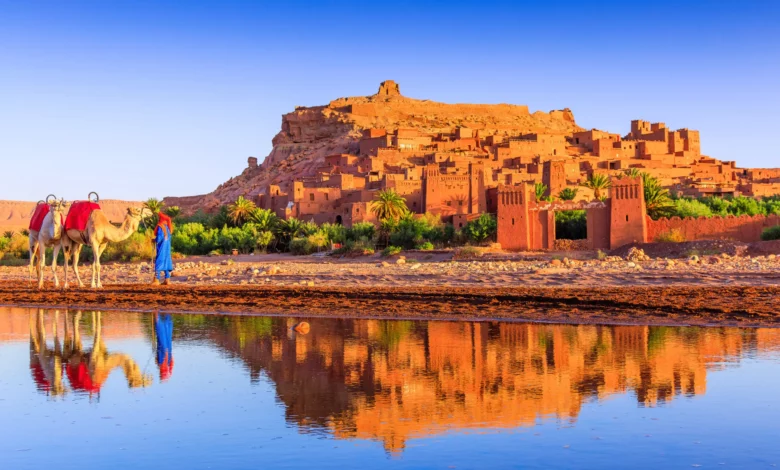
- 18. Ait Benhaddou: A UNESCO-protected ksar (fortified village) that has served as the backdrop for Gladiator and Game of Thrones.
- 19. Ouarzazate: Known as the “Hollywood of Morocco,” home to Atlas Film Studios and the impressive Taourirt Kasbah.
- 20. Dades Valley & Gorge: Famous for its winding “Monkey Fingers” rock formations and dramatic hairpin mountain roads.
- 21. Todra Gorge: A breathtaking canyon near Tinghir where sheer limestone cliffs rise 300 meters above a narrow, crystal-clear river.
- 22. Tinghir: An oasis town offering sweeping views of lush palm groves juxtaposed against arid desert mountains.
- 23. Skoura: A tranquil palmery dotted with restored 17th-century kasbahs, including the iconic Kasbah Amridil.
- 24. Imlil & Mount Toubkal: The trekking hub of the High Atlas, serving as the basecamp for climbing North Africa’s highest peak (4,167 meters).
- 25. Ourika Valley: An easy day trip from Marrakech featuring riverside Berber villages, saffron gardens, and the Setti Fatma waterfalls.
- 26. Taroudant: Often called “Little Marrakech,” this walled southern town offers authentic souks without the overwhelming crowds.
4. Atlantic Coast & Off-the-Beaten-Path Wonders (Places 27–39)
To round out the 39 best places to visit in Morocco, head west to the windswept Atlantic shoreline or venture into the Middle Atlas and Anti-Atlas mountains.

Surf Towns & Coastal Retreats
- 27. Essaouira: A laid-back port city with 18th-century sea bastions, fresh seafood grills, thriving gnawa music culture, and world-class windsurfing.
- 28. Agadir: A modern resort city boasting a 10-kilometer crescent beach, sunny year-round weather, and a rebuilt hilltop kasbah.
- 29. Taghazout: A bohemian fishing village turned global surf mecca, packed with yoga retreats and oceanfront cafés.
- 30. Legzira Beach: Famous for its dramatic red-sandstone sea arches towering over the Atlantic surf near Sidi Ifni.
- 31. Sidi Ifni: A quirky coastal town showcasing faded Spanish Art Deco architecture and dramatic ocean cliffs.
- 32. Mirleft: A quiet enclave of secluded coves, paragliding cliffs, and uncrowded beaches.
- 33. Oualidia: A serene coastal lagoon celebrated as Morocco’s oyster capital, ideal for kayaking and birdwatching.
- 34. Safi: Renowned for its centuries-old pottery quarter and massive Atlantic waves favored by expert surfers.
- 35. Dakhla: Located in the far south, this windswept peninsula is one of the world’s premier kitesurfing destinations.
Mountain & Desert Outliers
- 36. Tafraoute: Nestled in the Anti-Atlas Mountains, surrounded by surreal pink granite boulders and almond-blossom valleys.
- 37. Midelt: A high-altitude town between Fes and the Sahara, known for apple orchards and mineral specimens.
- 38. Azrou: Surrounded by ancient cedar forests in the Middle Atlas, where wild Barbary macaques roam freely.
- 39. Ifrane: Nicknamed “Little Switzerland,” this clean, alpine-style town features pitched roofs, manicured parks, and nearby winter ski slopes.
5. Where to Stay: Neighborhoods & Accommodation Tiers
Choosing the right accommodation dramatically shapes your Moroccan experience. In historic cities like Marrakech and Fes, staying inside the medina in a traditional riad (a courtyard house with an interior garden) immerses you in local architecture, whereas staying in the Ville Nouvelle (New Town) offers modern hotels, wide boulevards, and easier taxi access.
For budget travelers, social hostels and family-run dars (smaller guesthouses) provide clean rooms and rooftop breakfasts. Luxury travelers can indulge in five-star palatial resorts like La Mamounia or Royal Mansour, or book private glamping tents with en-suite bathrooms in Erg Chebbi.
| Accommodation Tier | Typical Nightly Rate (MAD / USD) | Best Neighborhoods | Key Amenities Included |
|---|---|---|---|
| Budget (Hostels & Simple Dars) | 150 – 450 MAD ($15 – $45) | Marrakech Medina (Mouassine), Fes Bab Bou Jeloud | Shared or private basic room, rooftop terrace, traditional mint tea & breakfast |
| Mid-Range (Boutique Riads) | 750 – 1,800 MAD ($75 – $180) | Marrakech Riad Zitoun, Chefchaouen Medina, Essaouira | Air conditioning, plunge pool, artisanal decor, full Moroccan breakfast |
| Luxury (5-Star Palaces & Desert Camps) | 3,500 – 12,000+ MAD ($350 – $1,200+) | Marrakech Palmeraie/Hivernage, Erg Chebbi Luxury Camps | Private butler, hammam spa, heated pools, fine dining, airport transfers |
6. Complete Morocco Budget, Transport & Ticket Cost Breakdown
Morocco is remarkably affordable, though costs can escalate quickly if you rely on private drivers or luxury dining. Fortunately, the country’s public transportation network is modern, reliable, and easy to navigate.
Trains, Buses & Taxis
The national railway operator, ONCF, connects Tangier, Rabat, Casablanca, Marrakech, Meknes, and Fes. The Al Boraq high-speed train slashes the journey from Tangier to Casablanca to just over two hours. For destinations without rail access—such as Chefchaouen, Essaouira, and Merzouga—book air-conditioned coaches through CTM or Supratours.
Within cities, use metered petit taxis (always insist on the meter, or compteur, being turned on). For intercity hops, shared grand taxis depart once all six seats are filled, offering a fast and inexpensive local transit option.
| Expense Category | Budget Option (MAD / USD) | Mid-Range Option (MAD / USD) | Notes & Insider Tips |
|---|---|---|---|
| ONCF Al Boraq Rail (Tangier–Casa) | 145 MAD ($14.50) – 2nd Class | 245 MAD ($24.50) – 1st Class | Book 1st class for assigned seating and extra luggage space |
| CTM / Supratours Bus (Fes–Chefchaouen) | 75 MAD ($7.50) | 95 MAD ($9.50) | Reserve 48 hours ahead in peak spring/autumn months |
| Daily Meals (Street Food vs. Restaurants) | 80 – 150 MAD ($8 – $15) | 250 – 500 MAD ($25 – $50) | Tagines cost 40–70 MAD locally; 120–200 MAD in tourist riads |
| Major Attractions (Bahia Palace, Majorelle) | 70 MAD ($7.00) | 150 MAD ($15.00) | Jardin Majorelle requires timed online reservations |
| Private Driver (Per Day, Fuel Included) | N/A | 1,200 – 1,800 MAD ($120 – $180) | Ideal for groups of 3–4 crossing the High Atlas to the Sahara |
7. High-CPC Financial, Insurance & Connectivity Strategy
Navigating Morocco’s cash-heavy economy and remote desert highways requires smart financial and risk-management preparation before you board your flight.
Essential Travel Insurance, Banking & Connectivity Checklist
1. Travel Medical Insurance & Emergency Evacuation Coverage: Standard domestic health plans rarely cover international care. Secure a comprehensive travel medical insurance policy that includes at least $100,000 in primary medical coverage and $250,000 in emergency medical evacuation coverage. If you suffer an injury while trekking Mount Toubkal or riding ATVs in the Sahara, private airlift evacuation to Casablanca or Europe can easily exceed $50,000 out of pocket.
2. Zero-Foreign-Transaction-Fee Credit Cards & ATM Reimbursement: While riads and upscale restaurants accept Visa and Mastercard, souks, taxis, and desert camps operate strictly in cash. Carry a zero-foreign-transaction-fee credit card for hotel bookings and a debit card that offers global ATM fee reimbursement. Always decline Dynamic Currency Conversion (DCC) at Moroccan ATMs and choose to be charged in local Moroccan Dirhams (MAD) to avoid 5%–8% hidden markups.
3. Car Rental Collision Damage Waiver (CDW): If you plan to self-drive through the Dades Valley or Atlantic coast, verify whether your premium travel credit card provides primary collision damage waiver (CDW) and rental car deductible protection. Moroccan rental agencies frequently require large credit card holds (10,000–15,000 MAD) unless you purchase their supplemental zero-deductible insurance.
4. 5G eSIM International Data Roaming Plans: Avoid exorbitant carrier roaming fees by installing a 5G eSIM international data plan before departure, or purchasing a local Maroc Telecom or Orange SIM card upon arrival at Casablanca or Marrakech airports. Reliable 4G/5G coverage is available in all major cities and along most coastal highways, keeping Google Maps and translation apps running smoothly.
8. Cultural Etiquette, Safety, Packing & Common Mistakes
Morocco is a welcoming, hospitable nation, but understanding local customs will help you blend in respectfully and avoid common tourist pitfalls.
Cultural Etiquette & Dress Code
Morocco is a moderate Muslim country where modest dress is appreciated, especially outside major beach resorts. Both men and women should cover their shoulders and knees when walking through medinas, rural villages, and religious districts. Always ask for permission before photographing locals, artisans, or snake charmers, as snapping photos without consent often leads to demands for payment.
Safety & Avoiding Common Scams
Violent crime against tourists is rare, but petty scams are common in Marrakech and Fes. Politely decline unsolicited “guides” who tell you a street or monument is closed—they are usually trying to reroute you to a relative’s carpet shop. Agree on taxi fares before getting in if the driver refuses to use the meter, and keep your valuables in a zipped crossbody bag in crowded souks.
Smart Packing Checklist
- Breathable Layers: Linen shirts, lightweight trousers, and a packable down jacket for chilly Atlas Mountain or Sahara nights.
- Footwear: Closed-toe walking shoes with good grip for uneven, cobblestone medina alleys.
- Health Essentials: Hand sanitizer, electrolyte packets, and bismuth subsalicylate for sensitive stomachs.
9. Local Dining, Hidden Gems & Practical FAQs
Moroccan cuisine is a sensory highlight of any trip. Beyond the ubiquitous tagine (slow-cooked stews in conical clay pots) and Friday couscous, seek out pastilla (a savory-sweet pigeon or chicken pie dusted with cinnamon), harira soup, and msemen flatbreads served with honey.
For hidden culinary gems, visit the communal wood-fired ovens (ferran) tucked inside residential neighborhoods, or sample fresh-squeezed orange juice for 5 MAD ($0.50) at Jemaa el-Fnaa. Always drink bottled or filtered water rather than tap water.
Frequently Asked Questions About Visiting Morocco
1. How many days do you need to see the best places to visit in Morocco?
A minimum of 10 to 14 days is ideal for a classic loop covering Marrakech, the Sahara Desert, Fes, and Chefchaouen. If you only have 7 days, focus on one region—such as Marrakech, the High Atlas, and Essaouira—to avoid spending half your trip in transit. Two full weeks allow for a relaxed pace without rushing.
2. Is Morocco safe for solo female travelers?
Yes, Morocco is generally safe for solo female travelers, though verbal street harassment (catcalling) can occur in busy medinas. Dressing modestly, wearing sunglasses, walking with purpose, and staying in reputable riads significantly reduces unwanted attention. Many solo travelers also enjoy joining small group tours for the Sahara Desert leg.
3. What is the currency in Morocco, and can I use Euros or Dollars?
The official currency is the Moroccan Dirham (MAD), which is a closed currency—meaning you cannot easily obtain it outside Morocco. While some upscale hotels and tour operators accept Euros, everyday transactions in souks, cafés, and taxis require Dirhams. Withdraw cash from bank-affiliated ATMs upon arrival at the airport.
4. Do I need a visa to visit Morocco?
Citizens of the United States, Canada, the European Union, the United Kingdom, and Australia do not need a visa for tourist stays of up to 90 days. Your passport must be valid for at least six months beyond your planned entry date. Always verify current entry requirements with your local embassy before traveling.
5. What is the best way to get from Marrakech to the Sahara Desert?
The most popular route is a 3-day, 2-night overland journey from Marrakech to Merzouga (Erg Chebbi) via Ait Benhaddou and the Dades Valley. You can book a shared group tour, hire a private driver, or rent a car. Alternatively, you can take a direct overnight Supratours bus from Marrakech to Merzouga, which takes roughly 12 hours.
From the ancient imperial capitals to the silent, starlit dunes of the Sahara, the best places to visit in Morocco offer an unmatched blend of adventure, culture, and hospitality. By timing your visit for spring or autumn, utilizing Morocco’s efficient rail and bus networks, and protecting your trip with comprehensive travel insurance and zero-fee banking, you are guaranteed an extraordinary North African journey.
By following this comprehensive blueprint, your best places to visit in Morocco will deliver authentic cultural experiences, predictable travel costs, and seamless day-to-day logistics.