
renting a car in Morocco is the single most effective way to transform a standard city-hopping itinerary into an unforgettable, self-paced adventure across imperial capitals, Atlas Mountain passes, and Saharan dunes. While Morocco boasts an expanding rail network, having your own set of wheels grants you complete freedom to stop at roadside argan cooperatives, hidden coastal coves, and remote kasbahs. However, navigating local rental desks, understanding insurance deductibles, and mastering Moroccan road etiquette require careful preparation before you ever turn the ignition key.
Quick Answer: The best approach to renting a car in Morocco involves booking a compact SUV or manual sedan 4–6 weeks ahead, choosing a reputable international or vetted local agency at Casablanca or Marrakech airports, and securing zero-excess Collision Damage Waiver (CDW) coverage to eliminate 10,000–15,000 MAD ($1,000–$1,500) security deposits.
At-a-Glance Planning Summary
- Average Daily Rate: 250–450 MAD ($25–$45 USD) for economy manual; 550–900 MAD ($55–$90 USD) for automatic SUVs.
- Best Driving Seasons: March–May and September–November for mild temperatures and clear mountain passes.
- Required Documents: Valid passport, home driver’s license (held 1+ year), International Driving Permit (IDP), and an embossed credit card.
- Key Financial Tip: Pair a zero-foreign-transaction-fee credit card with standalone excess-reimbursement insurance to save up to 50% at the counter.
Renting a car in Morocco: 1. Overview, Timing & Strategic Planning for Your Road Trip
Timing your journey correctly is just as important as selecting the right vehicle. Therefore, understanding Morocco’s distinct regional climates will help you avoid washed-out desert roads or snowbound mountain passes. In addition, booking during shoulder seasons ensures lower daily rental rates and far less congestion around major medinas.
Best Months and Seasonal Weather Breakdown
Spring (March through May) and autumn (September through November) offer the most comfortable driving conditions across the entire country. During these months, daytime temperatures hover between 20°C and 28°C (68°F–82°F), making long stretches through the Draa Valley or Middle Atlas genuinely pleasant. Meanwhile, summer (June through August) brings intense heat exceeding 42°C (108°F) in Marrakech and Merzouga, which places heavy strain on vehicle air conditioning systems.
In contrast, winter (December through February) delivers mild coastal weather but introduces snow and black ice on high-altitude routes like the Tizi n’Tichka pass. Consequently, travelers planning winter mountain crossings should specifically request vehicles equipped with winter-ready tires and verify road closures daily.
Crowd Patterns and Airport Pickup Strategy
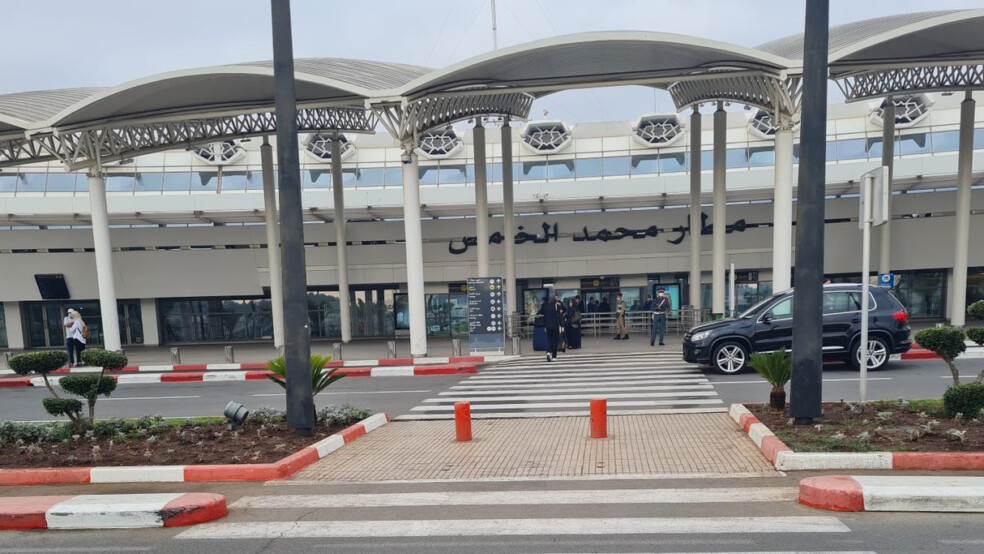
Major arrival hubs such as Casablanca Mohammed V International Airport (CMN) and Marrakech Menara Airport (RAK) experience peak rental counter queues between 11:00 AM and 4:00 PM. For example, arriving on a morning flight or scheduling your pickup for an off-peak hour can easily save you 45 minutes of paperwork. Furthermore, picking up your car at the airport rather than a downtown medina office allows you to merge directly onto wide ring roads without navigating chaotic city-center roundabouts.
2. The 12 Best Companies for Renting a Car in Morocco
Choosing between global franchises and established Moroccan agencies is a critical decision when renting a car in Morocco. International brands generally offer newer fleets and standardized contracts, whereas vetted local agencies frequently provide more flexible deposit terms and personalized WhatsApp support. Above all, you should always verify whether your chosen agency operates an in-terminal desk or requires a shuttle transfer.
Top 6 International Rental Agencies in Morocco
Global operators maintain strict maintenance schedules and predictable roadside assistance networks across major cities. Specifically, the following six international brands consistently earn high marks from travelers:
- Sixt: Known for a modern fleet of German and French vehicles, Sixt operates convenient desks at Casablanca, Marrakech, Agadir, and Tangier airports.
- Hertz: Offers reliable automatic transmission availability and clear corporate-style contracts, though counter upsells can be persistent.
- Avis: A strong choice for one-way rentals between northern and southern hubs, backed by 24/7 English and French phone support.
- Europcar: Widely present at both airports and major ONCF train stations, making hybrid rail-and-road itineraries seamless.
- Budget: Delivers competitive economy rates while sharing much of the same back-end fleet infrastructure as Avis.
- Enterprise / Alamo: Increasingly popular for transparent fuel policies and well-maintained compact SUVs suited for mountain roads.
Top 6 Vetted Local Moroccan Agencies
Local companies often shine when it comes to personalized service, zero-deposit options, and lower daily rates. However, you must inspect the vehicle thoroughly before departing the lot. Notably, these six local operators stand out for reliability:
- Aircar: One of Morocco’s largest domestic agencies, offering competitive pricing and desks at nearly every major airport.
- Locationauto: Praised for straightforward contracts, clean Dacia and Renault fleets, and responsive customer service.
- Medloc Maroc: A favorite among long-term visitors for flexible mileage terms and transparent damage checklists.
- Sovoy Cars: Specializes in airport meet-and-greet pickups with clear communication via messaging apps prior to arrival.
- Trocadero Car: Ideal for travelers starting in Tangier or Tetouan who want well-kept economy hatchbacks.
- First Class Car Morocco: Caters to guests seeking higher-tier SUVs, 4x4s, and automatic transmissions with optional zero-excess packages.
| Agency Type | Avg. Daily Rate (MAD / USD) | Typical Security Deposit | Automatic Availability | Best For |
|---|---|---|---|---|
| International Franchises (Sixt, Hertz, Avis) | 350–650 MAD ($35–$65) | 10,000–18,000 MAD ($1,000–$1,800) | High (Book Early) | One-way rentals & corporate standards |
| Large Local Agencies (Aircar, Locationauto) | 250–450 MAD ($25–$45) | 5,000–10,000 MAD ($500–$1,000) | Moderate | Budget-conscious road trippers |
| Boutique / 4×4 Specialists | 750–1,400 MAD ($75–$140) | 8,000–15,000 MAD ($800–$1,500) | High | Off-road desert & Atlas routes |
3. Zero-Excess Insurance, Deposits & Deductible Breakdown
Understanding insurance terminology is the most effective way to avoid unexpected charges when renting a car in Morocco. Almost every base rental rate includes mandatory third-party liability insurance, which covers injuries or property damage you might cause to others. However, basic Collision Damage Waiver (CDW) almost always carries a steep deductible—often called an “excess”—ranging from 10,000 MAD to 15,000 MAD ($1,000–$1,500 USD).
How Zero-Excess (Super CDW) Works
Zero-excess insurance, frequently marketed as Super CDW or Full Protection, reduces your financial liability for bodywork damage or theft to 0 MAD. Therefore, if a stray pebble cracks your windshield on the road to Ouarzazate or someone scuffs your bumper in a tight parking lot, you pay nothing out of pocket. In addition, purchasing zero-excess coverage directly from the rental counter usually lowers—or completely eliminates—the massive credit card hold otherwise required at pickup.
Meanwhile, many travelers opt for third-party excess reimbursement policies purchased online before departure. While this approach is significantly cheaper, you must still leave the full security deposit on your credit card at the Moroccan rental desk and file a claim later if damage occurs.
Common Exclusions You Must Check
Even comprehensive zero-excess policies contain specific exclusions that catch unprepared drivers off guard. Specifically, standard contracts rarely cover the following:
- Undercarriage and Oil Pan Damage: Driving a standard sedan onto unpaved pistes (dirt tracks) voids most insurance immediately.
- Tires, Rims, and Glass: Basic CDW excludes windshields and punctures unless you explicitly add Glass & Tire protection.
- Lost Keys or Misfueling: Putting gasoline into a diesel engine—or vice versa—results in full repair charges.
- Unreported Accidents: Failing to obtain an official police report (constat) at the scene invalidates your coverage entirely.
4. Complete Budget, Fuel, Toll & Transit Cost Comparison
Calculating the true cost of renting a car in Morocco requires looking beyond the headline daily rate. For example, fuel prices, highway tolls, and urban parking attendants all add to your daily travel budget. Fortunately, Morocco’s infrastructure is remarkably affordable compared to Western Europe or North America.
Fuel Prices, Autoroute Tolls & Parking
Diesel (Gazole) remains slightly cheaper than unleaded gasoline (Sans Plomb), hovering around 12.50–13.50 MAD ($1.25–$1.35 USD) per liter, while gasoline averages 14.00–15.00 MAD ($1.40–$1.50 USD) per liter. Consequently, requesting a diesel-powered Dacia Duster or Renault Clio can noticeably reduce your fuel bill on a 1,500-kilometer loop. Furthermore, Morocco’s modern Autoroutes du Maroc toll highways connect Tangier, Rabat, Casablanca, Marrakech, and Agadir. Tolls are inexpensive—typically 60 to 90 MAD ($6–$9 USD) for a three-hour stretch—and toll booths accept cash (MAD) as well as major credit cards.
In cities, you will encounter official and informal parking attendants wearing high-visibility vests, known locally as gardiens. Tipping them 5 to 10 MAD ($0.50–$1.00 USD) for daytime street parking, or 20–30 MAD ($2–$3 USD) for overnight guarded lots, is standard practice and keeps your vehicle safe.
| Transport Mode | Casablanca to Marrakech Cost | Flexibility | Best Use Case |
|---|---|---|---|
| Rental Car (Economy + Fuel + Tolls) | ~450 MAD ($45) total/day | 100% Flexible | Multi-stop loops, Atlas Mountains, Sahara |
| ONCF Al Boraq / Atlas Train | 120–240 MAD ($12–$24) per person | Fixed Schedule | Fast city-to-city transfers (Tangier–Casablanca–Marrakech) |
| CTM / Supratours Bus | 100–160 MAD ($10–$16) per person | Fixed Schedule | Budget solo travelers reaching Essaouira or Chefchaouen |
| Private Driver / Grand Taxi | 1,200–1,800 MAD ($120–$180) per day | High | Travelers who prefer not to drive themselves |
5. Financial, Insurance & Connectivity Strategy for Drivers
Essential Financial, Insurance & Mobile Data Protections
Smart financial planning protects your wallet from hidden fees and worst-case emergencies while renting a car in Morocco. Therefore, before you depart, align your credit cards, medical coverage, and mobile connectivity.
1. Travel Medical Insurance & $250k Emergency Medical Evacuation Coverage
While your rental car’s liability policy covers third-party road injuries, it does not replace comprehensive personal health coverage. Specifically, travelers driving through remote regions like the Sahara or High Atlas should carry travel medical insurance with at least $250,000 in emergency medical evacuation coverage. Private clinics in Casablanca and Marrakech offer high-quality care, but they require upfront payment guarantees, and airlifting a patient from a remote mountain pass can easily exceed $50,000.
2. Zero-Foreign-Transaction-Fee Credit Cards & ATM Currency Exchange
Rental agencies in Morocco strictly require an embossed credit card in the primary driver’s name—debit cards are almost universally rejected for security deposits. As a result, using a zero-foreign-transaction-fee credit card saves you 3% on every rental charge, fuel fill-up, and toll. In addition, always decline “Dynamic Currency Conversion” at card terminals and ATMs; choose to be billed in Moroccan Dirhams (MAD) so your home bank handles the exchange rate fairly. For cash needs, pair your credit card with a checking account that offers ATM fee reimbursement.
3. Car Rental Collision Damage Waiver (CDW) & Deductible Protection
Many premium travel credit cards include primary or secondary Collision Damage Waiver (CDW) benefits when you pay for the entire rental with that card and decline the agency’s in-house CDW. However, you must verify in writing that your card issuer covers Morocco and does not exclude SUVs or manual transmissions. If your card only offers secondary coverage, consider pairing it with standalone zero-excess deductible protection for complete peace of mind.
4. 5G eSIM International Data Roaming Plans
Reliable navigation is non-negotiable when exiting chaotic medina ring roads. Consequently, installing a 5G eSIM international data roaming plan before landing ensures instant access to Google Maps, Waze, and offline maps without paying exorbitant carrier roaming fees. Local networks like Maroc Telecom and Orange offer strong 4G/5G coverage along major highways and surprisingly deep into desert valleys.
6. Moroccan Driving Etiquette, Safety & Common Mistakes
Driving in Morocco is generally safe and rewarding, provided you adapt to local rhythms and stay alert. For more general preparation, review our destination safety checklist before your trip. Above all, patience and defensive driving will serve you far better than aggressive horn-honking.
Navigating Police Checkpoints and Speed Traps
The Royal Gendarmerie operates frequent, routine roadside checkpoints at the entrances and exits of almost every town. When you see a “HALTE” or “CONTROLE” sign, slow down smoothly, turn down your music, and wait for the officer to wave you through or ask for your documents. Always keep your passport, driver’s license, IDP, and rental contract within easy reach. Furthermore, strictly obey posted speed limits—typically 120 km/h on highways, 100 km/h on open rural roads, and 40–60 km/h in urban zones—as mobile radar traps are extremely common.
5 Common Mistakes to Avoid
- Driving After Dark in Rural Areas: Unlit donkey carts, pedestrians, and stray livestock make nighttime driving outside major cities hazardous. Plan to arrive at your riad before sunset.
- Skipping the Pre-Rental Video Walkaround: Always record a timestamped 360-degree video of the car’s exterior, windshield, and interior before leaving the lot.
- Booking an Automatic Last Minute: Manual transmissions dominate Moroccan fleets; book automatic vehicles at least 6–8 weeks in advance.
- Ignoring One-Way Drop-Off Fees: Returning a car in a different city (e.g., Casablanca to Marrakech) often incurs a 500–1,200 MAD ($50–$120 USD) fee.
- Forgetting Offline Maps: Download offline regions in Google Maps or Maps.me in case signal drops in deep mountain gorges.
7. Practical Road Trip Routes & Essential FAQs
With your vehicle secured, you can easily link Morocco’s most iconic UNESCO World Heritage official guide sites—such as Ait Benhaddou, Volubilis, and the medina of Fes—into a seamless loop. For a complete breakdown of daily expenses beyond your rental car, check out our travel budget guide. Below, we answer the five most frequent questions travelers ask before hitting the road.
1. Do I really need an International Driving Permit (IDP) for renting a car in Morocco?
Yes, carrying an International Driving Permit alongside your valid home driver’s license is strongly recommended. While some rental counters may only ask for your home license, Moroccan traffic police frequently request an IDP during roadside checks. Obtaining one before departure takes minimal effort and prevents potential fines.
2. Is it better to rent a 4×4 or a standard compact car in Morocco?
For 90% of paved itineraries—including Marrakech, Fes, Chefchaouen, Essaouira, and the paved road to Merzouga—a standard compact sedan or small crossover is completely sufficient. However, if you plan to drive unpaved mountain tracks or deep desert pistes, a true 4×4 with high ground clearance is essential. Remember that standard rental insurance voids coverage on unpaved roads.
3. Can I drive a Moroccan rental car into Spain or Ceuta/Melilla?
No, almost all Moroccan rental agencies strictly prohibit taking their vehicles across international borders or onto ferries to Spain. If you are combining southern Spain with northern Morocco, you should return your Spanish rental in Algeciras or Tarifa, cross as a foot passenger, and pick up a new car in Tangier.
4. What happens if I get a speeding ticket in a rental car?
If you are stopped by a radar checkpoint, the officer will issue an on-the-spot fine—typically 150 to 400 MAD ($15–$40 USD)—which you pay directly in cash and receive an official receipt. In contrast, automated speed camera fines are mailed to the rental agency, which will charge your credit card plus an administrative fee.
5. What is the minimum age for renting a car in Morocco?
Most agencies require drivers to be at least 21 years old and to have held a valid driver’s license for at least one full year. Some companies charge a young-driver surcharge for travelers under 25, while luxury or 4×4 categories often require a minimum age of 25.
Conclusion: Hit the Moroccan Open Road with Confidence
Ultimately, renting a car in Morocco unlocks a level of freedom, cultural immersion, and scenic beauty that fixed tours simply cannot match. By booking early, choosing a vetted agency, securing zero-excess insurance, and pairing your trip with zero-fee credit cards and a reliable 5G eSIM, you eliminate the stress of unexpected fees. Pack your patience, respect local speed limits, and enjoy one of the world’s most rewarding road trip destinations.